
Nutrition and Care


What nutrition, hydration, and daily care practices can reveal about a facility's ability to meet complex medical and functional needs.
Nutrition
Why everyday care matters more than most families are told
The role of nutrition in daily care
Nutrition and daily care are inseparable.
Residents may need:
reminders to eat
help opening containers
assistance with feeding
encouragement when appetite is low
time — not rushed meals
When staffing is thin or inconsistent:
meals are shortened
assistance is delayed or skipped
intake is charted without being truly observed
A resident can be “offered three meals a day” and still not be nourished.


Why nutrition is not just “food service”


When families think about nursing home care, they’re often focused on medical needs: therapy, medications, diagnoses, and physician oversight.
But for most residents, daily care and nutrition shape quality of life far more than any single medical decision.
Meals, hydration, assistance, and consistency are where good care shows up — or quietly breaks down.
In nursing homes, nutrition is not simply about calories or menus.
It affects:
strength and mobility
wound healing
cognition and alertness
infection risk
mood and engagement
Poor nutrition often looks subtle at first:
smaller portions eaten
skipped meals
weight loss explained away as “normal aging”
dehydration masked as confusion or fatigue
By the time it becomes obvious, residents are often already declining.
Nutrition
Why everyday care matters more than most families are told
The role of nutrition in daily care
Nutrition and daily care are inseparable.
Residents may need:
reminders to eat
help opening containers
assistance with feeding
encouragement when appetite is low
time — not rushed meals
When staffing is thin or inconsistent:
meals are shortened
assistance is delayed or skipped
intake is charted without being truly observed
A resident can be “offered three meals a day” and still not be nourished.
Why nutrition is not just “food service”


When families think about nursing home care, they’re often focused on medical needs: therapy, medications, diagnoses, and physician oversight.
But for most residents, daily care and nutrition shape quality of life far more than any single medical decision.
Meals, hydration, assistance, and consistency are where good care shows up — or quietly breaks down.
In nursing homes, nutrition is not simply about calories or menus.
It affects:
strength and mobility
wound healing
cognition and alertness
infection risk
mood and engagement
Poor nutrition often looks subtle at first:
smaller portions eaten
skipped meals
weight loss explained away as “normal aging”
dehydration masked as confusion or fatigue
By the time it becomes obvious, residents are often already declining.
Dementia, appetite, and eating challenges
For residents with dementia, nutrition becomes even more complex.
Challenges may include:
forgetting how to eat
refusing food
difficulty using utensils
distraction in busy dining rooms
changes in taste or appetite
Good dementia care recognizes that:
eating is a skill, not just a task
patience and routine matters
familiar foods matter
Poor dementia nutrition often shows up as:
weight loss labeled “expected”
supplements replacing meals
residents eating alone because it’s faster


Special diets vs real-life eating
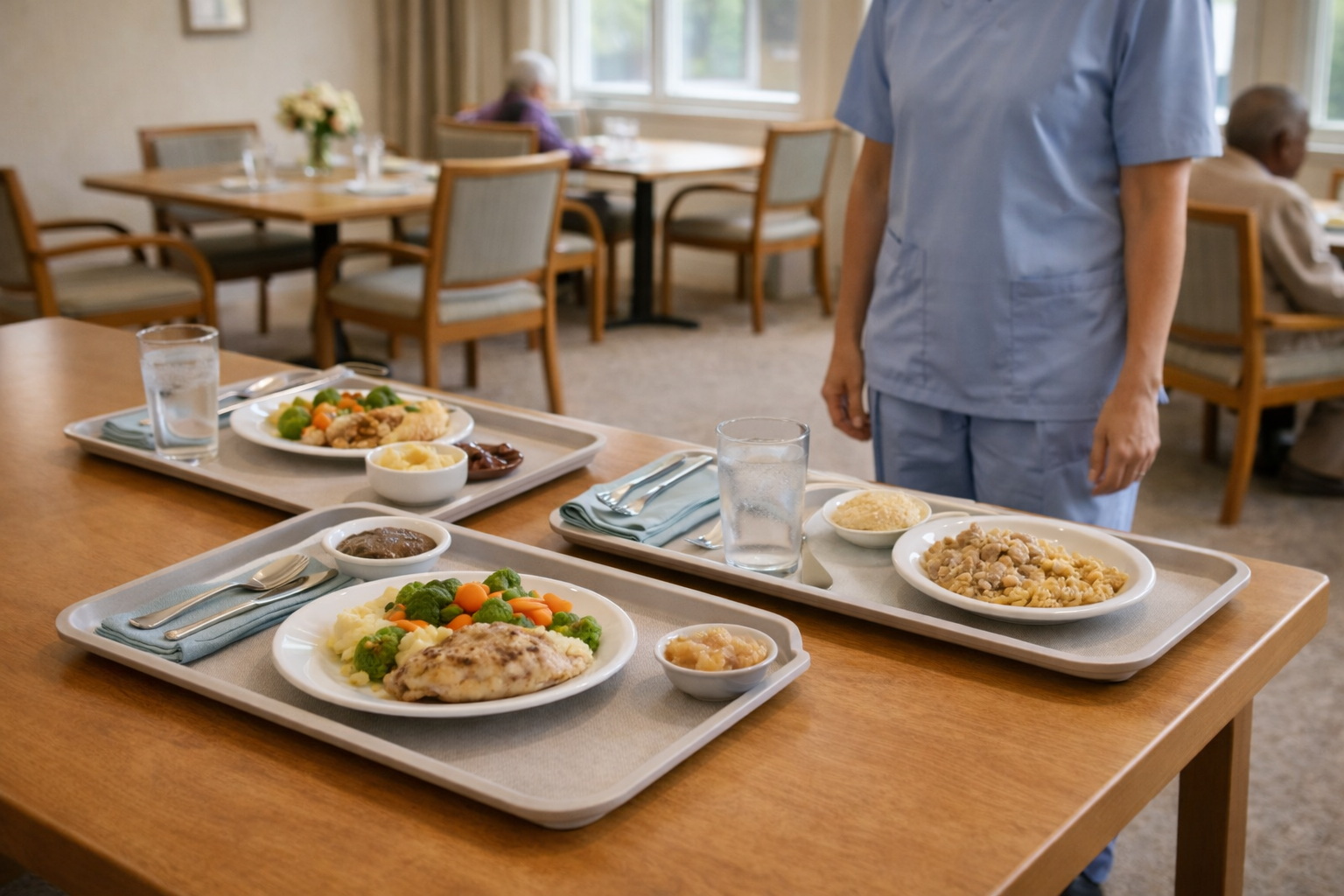
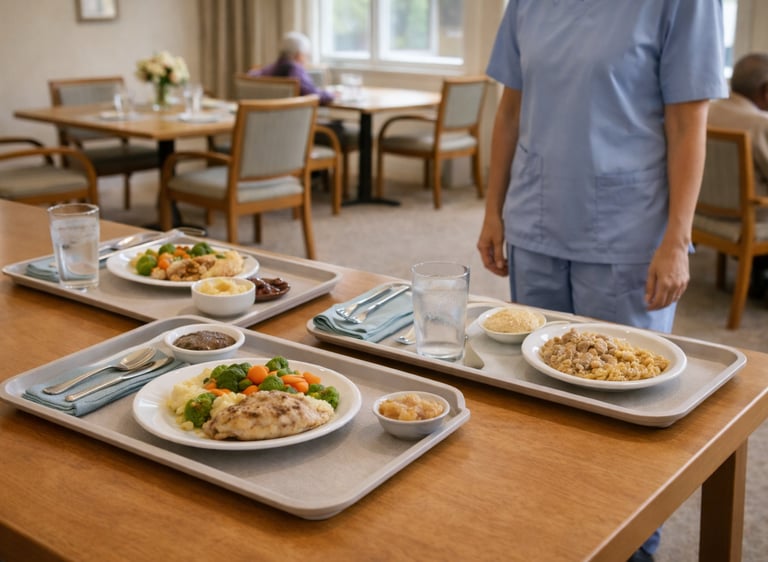
Many residents have special dietary needs:
texture-modified diets
diabetes management
renal diets
swallowing concerns
food preferences tied to culture or habit
On paper, these diets are easy to order.
In practice, they require:
staff awareness
flexibility
communication between nursing, dietary, and aides
A common red flag is hearing:
“They’re on a special diet”
without anyone explaining how that works at the table.
What this means for your decision
Nutrition and daily care reflect:
staffing consistency
attentiveness
coordination between departments
flexible food options
respect for dignity
Nutrition and daily care are harder to market than therapy hours or star ratings — but far more predictive of daily experience.
If a facility can explain how nutrition is supported in real life, that’s a strong signal.
If it cannot, no menu or policy will make up for it.


What families can reasonably ask about nutrition and culinary services


You are allowed to ask:
What happens if my family member eats poorly?
Who notices weight loss — and how quickly?
Is help available at every meal if needed?
How long do residents have to eat?
Are meals prepared on site?
How are swallowing concerns handled day to day?
How do you support residents with dementia during meals?
Clear answers suggest real systems.
Vague answers suggest reliance on documentation alone.
Contact
support@nursinghomeguide.org
© 2025. All rights reserved.
Important Disclaimer: This website provides educational information only and is not intended as medical, legal, or professional advice. Always consult with healthcare professionals, legal advisors, and facility administrators when making decisions about nursing home care. The information presented here should not be used as a substitute for professional guidance tailored to your specific situation.
Clear, independent guidance for choosing skilled nursing and memory care — without referral fees or sales pressure.